
Introduction
When your current mortgage deal is approaching its expiry, it is important to review your options carefully. Many homeowners begin considering switching mortgage deal arrangements or exploring whether remortgaging could offer a better solution. Knowing the difference between these options can help you manage your finances more effectively.
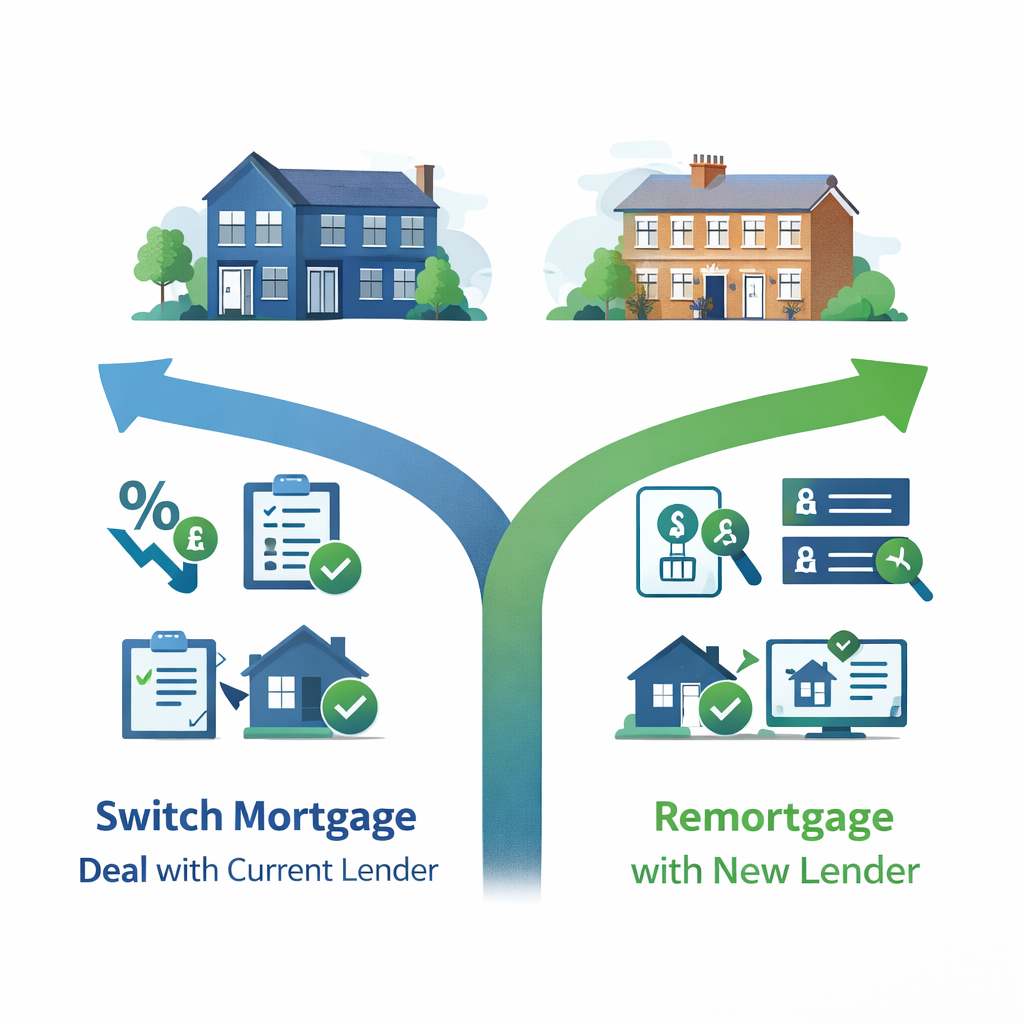
Homeowners often ask should I remortgage or switch mortgage deals when their fixed rate or introductory mortgage period ends. Each option has advantages depending on your circumstances, property value and long-term plans. This guide explains remortgage vs product transfer, outlines common mortgage deal ending options, and helps you understand which route may be suitable.
Understanding Mortgage Deal Expiry
Most mortgage products are offered with an introductory rate for a set period. Once that period ends, the mortgage typically moves onto a standard variable rate mortgage, which may result in higher monthly repayments.
For this reason, reviewing your mortgage before the mortgage rate expiry is essential. Common mortgage deal ending options include:
- switching mortgage deal with the same lender
- Remortgage with a new lender
- remaining on the lender’s standard variable rate
Taking time to assess these options allows you to compare current UK mortgage interest rates and choose a deal that supports your financial goals.
If your mortgage deal is ending soon, Mortgages RM can help you review available choices before your payments increase.
What Is Switching a Mortgage Deal With the Same Lender?
A mortgage product transfer means selecting a new mortgage deal from your existing lender when your current rate ends. This is also known as changing a mortgage deal with the same lender.
Instead of applying for a completely new mortgage, you simply move to another product offered by the same lender. This might include a new fixed-rate mortgage deal, a tracker mortgage rate, or another discounted rate option.
Because the lender already holds your mortgage account, the process can often be quicker and require fewer checks compared with a full remortgage application.
Benefits of Switching Mortgage Deal With Your Current Lender
For many homeowners, switching mortgage deals with their existing lender offers convenience and simplicity. Since the mortgage remains with the same provider, the process is often more straightforward.
Some potential advantages include:
- fewer administrative steps
- quicker arrangement compared with a new mortgage application
- limited documentation requirements
- continuity with your current mortgage provider
However, while this option can be convenient, it is still important to review whether the available rate remains competitive through a proper mortgage rate comparison.
What Is Remortgaging?
Remortgaging involves replacing your current mortgage with a new loan from another lender. When comparing remortgage vs product transfer, remortgaging gives borrowers access to a broader selection of mortgage deals across the market.
A remortgage may allow homeowners to secure more favourable mortgage interest rates UK lenders offer, adjust repayment terms or access additional borrowing.
Because it involves moving to another lender, the process normally includes a full application, affordability checks and review of the lender’s mortgage criteria.
Benefits of Remortgaging With a New Lender
Choosing to remortgage with a new lender can provide greater flexibility when reviewing your mortgage options. Since you are not restricted to one lender’s products, this allows you to review and compare more mortgage options.
Potential advantages include:
- broader mortgage rate comparison across lenders
- opportunity to review mortgage affordability
- ability to change mortgage repayment terms
- option for borrowing additional funds if required
Homeowners whose property value has increased may also find that remortgaging improves their loan-to-value ratio, which can unlock more competitive mortgage rates.
Costs to Consider Before Changing Your Mortgage
Before deciding whether to remortgage or switch mortgage deal, it is essential to review any costs associated with changing your mortgage.
Possible expenses may include:
- mortgage arrangement fees
- property valuation fees
- solicitor fees for remortgaging
- conveyancer fees
- mortgage exit fees
- early repayment charges
Early repayment charges may apply if you change your mortgage before the existing deal period ends. Reviewing these costs helps ensure the decision you make genuinely benefits your finances.
When Switching Your Mortgage Deal May Be Suitable
Switching to another deal with your existing lender may suit borrowers who prefer a simple and efficient process. If your financial circumstances remain largely unchanged, the lender may allow a straightforward transition to a new rate.
Situations where switching may work well include:
- satisfaction with your current lender
- desire for a quicker process
- minimal changes to income or financial position
- preference for avoiding a full mortgage application
In these situations, selecting a new rate from the same lender may provide a practical way to continue your mortgage without unnecessary complexity.
When Remortgaging May Be the Better Option
Remortgaging may be worth considering if you want to review the wider mortgage market or make changes to your existing loan structure.
Remortgaging could be suitable if:
- Lower your monthly mortgage repayments
- Unlock equity from your property for other financial needs
- Take advantage of a better loan-to-value position
- Restructure your mortgage term to better reflect your current plans
Reviewing the remortgaging options available to UK homeowners can help determine whether switching lenders may provide long-term financial benefits.

Comparing Mortgage Options
Choosing between switching your mortgage deal and remortgaging is an important financial decision. Looking at how the two options compare can help you move forward with greater clarity and confidence.
| Factor | Switching Mortgage Deal | Remortgaging |
| Application process | Usually simpler | Full mortgage application required |
| Choice of deals | Limited to current lender | Wider market options available |
| Checks required | Often fewer checks | Full affordability review |
| Potential costs | May involve fewer fees | May include legal and valuation costs |
The right choice will depend on what matters most to you, whether that is the simplicity of staying with your current lender or the opportunity to secure a more competitive deal elsewhere.
Conclusion
Understanding the difference between switching mortgage deal arrangements and remortgaging helps homeowners make confident decisions when their current mortgage deal ends. Both options offer benefits depending on your financial circumstances, property value and plans, and it’s equally important to factor in the hidden costs of buying a home when weighing up your next steps. Not sure whether remortgaging or switching your mortgage deal is the right move? Mortgages RM can provide clear, professional guidance to help you review your options and choose the most suitable route forward.